How Much Does Crawlspace Encapsulation Cost in Charleston, SC? (2025 Breakdown)
Table of Contents
- Why Cost Questions Deserve a Straight Answer
- The Short Answer (And Why It Is a Range)
- What Actually Drives the Price Up or Down
- Breaking Down the Cost by Component
- The Add Ons That Are Actually Worth It
- What Red Flags Look Like When Getting Quotes
- How to Think About Return on Investment
- Frequently Asked Questions
- Get a Real Number for Your Home
Why Cost Questions Deserve a Straight Answer
If you have been searching online trying to figure out what crawlspace encapsulation actually costs in Charleston, you have probably run into a lot of vague answers. “It depends.” “Every project is different.” “Call us for a free quote.”
All of that is technically true, but it is not particularly helpful when you are trying to plan a budget or decide whether this is something you can tackle this year.
This post is going to give you the most honest, specific breakdown we can for what encapsulation costs in the Charleston, SC market in 2025. Real numbers. Real factors that change those numbers. And a clear explanation of what you are actually paying for so you can evaluate any quote you receive with confidence.
No fluff, no pressure. Just the information you need to make a good decision.
The Short Answer (And Why It Is a Range)
For a typical Charleston area home, crawlspace encapsulation runs somewhere between $3,000 and $10,000 in 2025. The national average sits in a similar range, but local factors in the Lowcountry, including the severity of Charleston’s humidity, the condition of many older crawlspaces in established neighborhoods, and the specific materials required for this climate, mean that mid to upper range projects are quite common here.
The most straightforward encapsulation jobs on smaller, accessible, clean crawlspaces with no pre existing damage land in the $3,000 to $5,000 range. Larger homes, crawlspaces in poor condition, or projects that require additional work before encapsulation can begin will move toward $6,000 to $10,000 and sometimes beyond.
That is a wide range, and the reason it exists is that crawlspaces vary enormously from one home to the next. Square footage, height clearance, existing moisture damage, what is already in the space, and what equipment the installation includes all play a role. The only way to get a number that applies to your specific home is to have someone physically inspect the space. But understanding the factors that influence cost will help you know what to expect before anyone shows up at your door.
What Actually Drives the Price Up or Down
Square footage of the crawlspace
This is the most straightforward factor. More square footage means more liner material, more labor hours, and generally more of everything. A 1,000 square foot crawlspace is going to cost meaningfully less than a 2,500 square foot one. Most quotes are built around a per square foot rate that covers materials and labor together.
The condition of the space before work begins
A clean, dry crawlspace with no existing damage is the best case scenario and the least expensive to encapsulate. A crawlspace that has standing water, existing mold, deteriorated insulation that needs to be removed, or wood rot that requires treatment before sealing is a more involved job. That prep work costs money, and it has to be done correctly before encapsulation can happen.
Height and accessibility
Some crawlspaces are tall enough to move around in with reasonable ease. Others require workers to crawl on their stomachs through tight spaces for hours. Tight, low clearance crawlspaces take significantly more labor time to complete properly, and that shows up in the price.
Number and type of vents and penetrations
Every vent that needs to be sealed, every pipe penetration, every gap in the foundation wall adds to the scope of work. Older Charleston homes in neighborhoods like West Ashley, James Island, or North Charleston sometimes have complex crawlspace configurations with many points that need to be addressed.
Whether a dehumidifier is included
This is one of the biggest single variables in any quote you receive. A crawlspace grade dehumidifier in a Lowcountry home is not optional in the way it might be in a drier climate. It is part of what makes an encapsulation actually work here. These units typically add $1,000 to $2,000 to the project cost depending on the size and capacity needed.
Breaking Down the Cost by Component
Understanding how the total breaks down helps you evaluate quotes and make sure you are comparing apples to apples when you get multiple estimates.
Vapor barrier liner
The liner is the foundation of the entire system. Quality matters here significantly. A 12 mil liner is the minimum acceptable standard, but in the Charleston market, many contractors recommend 16 to 20 mil for better durability and longer service life. Liner costs typically represent 30 to 40 percent of the total project cost.
Labor
Installation labor for a crawlspace encapsulation is physical, detailed work. Laying and securing the liner, taping all seams, cutting around obstructions, and sealing vents requires skill and time. Labor usually represents 35 to 45 percent of total cost.
Vent sealing materials
Rigid foam insulation panels, spray foam for gaps, and specialty covers for foundation vents add up across a full perimeter. This component is relatively modest but important.
Drainage systems
If the crawlspace has water intrusion issues beyond surface moisture, an interior drainage channel and sump pump may be necessary before encapsulation. This can add $2,000 to $4,000 to the project depending on the severity of the water problem.
Dehumidifier
As mentioned above, a properly sized crawlspace dehumidifier is a significant line item and one that is absolutely worth including in the Lowcountry climate.
The Add Ons That Are Actually Worth It
Insulation replacement
If your crawlspace has old fiberglass batt insulation that has absorbed moisture and sagged, replacing it is worth doing at the same time as encapsulation. Wet insulation does nothing useful and can harbor mold. Spray foam applied to the rim joists after encapsulation is a particularly good investment for energy efficiency.
Drainage board on the liner
Some contractors offer a dimple mat or drainage layer under the liner to allow any water that does reach the liner to flow rather than pool. In areas of the Lowcountry that see groundwater issues, this is a sensible addition.
Annual maintenance plan
A crawlspace dehumidifier needs periodic service. Some companies offer annual checkups that include filter cleaning, drain line inspection, and a general look at the liner and seals. Given how much work is going into protecting your home, this is a reasonable investment.
Sump pump with battery backup
If your crawlspace has ever had standing water, a sump pump is not optional. The battery backup component is worth adding given that Charleston is no stranger to power outages during storm season.
What Red Flags Look Like When Getting Quotes
Yahel Kama, owner of Emerald Home Solutions, has a straightforward take on this: “We always tell homeowners to get at least two or three quotes and to pay attention to what is actually included in each one. The lowest bid is not always the best deal, especially when it leaves out a dehumidifier or uses a thinner liner. You want to know exactly what you are getting before you sign anything.”
A few things to watch for when reviewing quotes from any contractor in the Charleston area:
- A quote that seems unusually low often means a thinner liner, vents left unsealed, or no dehumidifier included.
- A contractor who does not physically inspect your crawlspace before quoting is guessing.
- Be cautious of high pressure tactics or quotes that expire in 24 hours.
- Ask whether the quote includes removal of any existing materials like old vapor barrier or damaged insulation.
How to Think About Return on Investment
The number on the quote is only part of the story. The more useful question is what you are protecting and what the alternative costs.
An unencapsulated crawlspace in a Lowcountry home is not a neutral situation. It is actively accumulating damage. Floor joist replacement runs $5,000 to $15,000. Mold remediation runs $2,000 to $6,000. Higher monthly energy bills over years add up significantly. And a crawlspace problem discovered at the time of a home sale can cost you far more in price reductions or deal failures than the encapsulation ever would have.
When you add energy savings from reduced HVAC load, which research consistently puts at 15 to 25 percent in humid climates, to the avoided repair costs and the protection of your home’s resale value, encapsulation almost always pays for itself over a reasonable time horizon for a Charleston area home. The only variable is how long you wait to do it.
Frequently Asked Questions
1. Do prices vary a lot between contractors in the Charleston area?
Yes, meaningfully so. You can see quotes for similar scopes vary by $1,500 to $2,500 depending on the company, the materials they use, and what is included. Getting two or three quotes and comparing them line by line is the best approach.
2. Is financing available for crawlspace encapsulation?
Many contractors in the area offer financing options. It is worth asking. Some homeowners also use home equity lines of credit for crawlspace work since it is a home improvement that adds value.
3. What time of year is best to have this done in Charleston?
Fall and winter are generally the easier seasons for crawlspace work in terms of conditions, and some contractors have more scheduling availability during slower months. That said, if your crawlspace has a moisture problem, sooner is better regardless of season.
4. How do I know if a quote is for a full encapsulation or just a vapor barrier?
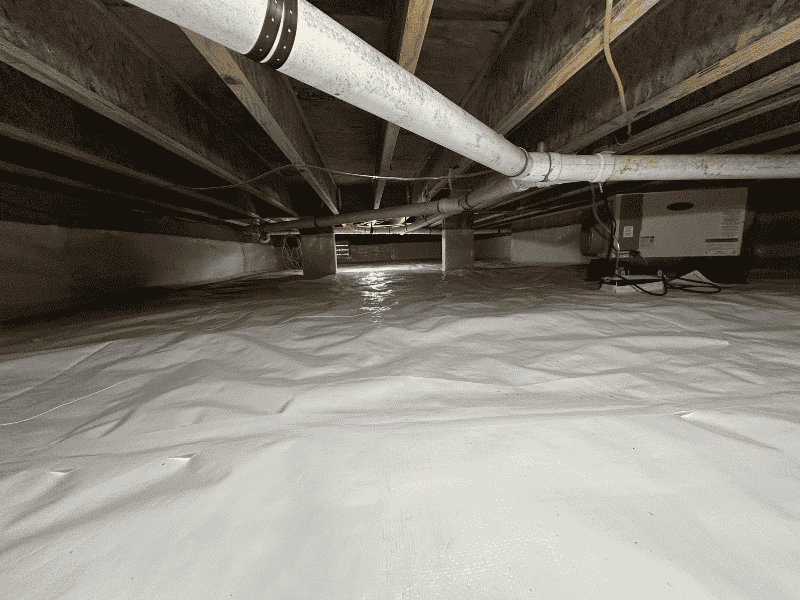
Ask directly. A full encapsulation includes sealed vents, a liner up the walls as well as on the floor, and active dehumidification. A basic vapor barrier is just a floor liner. They are very different products and should not be priced similarly.
5. Will my homeowner’s insurance help cover the cost?
Standard homeowner’s insurance generally does not cover encapsulation as a preventive measure. If moisture damage has occurred due to a specific covered event, some costs may be eligible. Check with your provider for specifics on your policy.
Get a Real Number for Your Home
The only way to know exactly what encapsulation will cost for your specific crawlspace is to have someone get under there and take a real look. Square footage and condition vary too much from home to home for any online estimate to be reliable.
The team at Emerald Home Solutions inspects crawlspaces across Charleston, Mount Pleasant, Summerville, Goose Creek, and all of the surrounding Lowcountry communities. We will give you a clear, honest, itemized quote based on what we actually find, with no pressure and no surprises.