
What Is Crawlspace Encapsulation? A Plain English Guide for Charleston Homeowners
Table of Contents
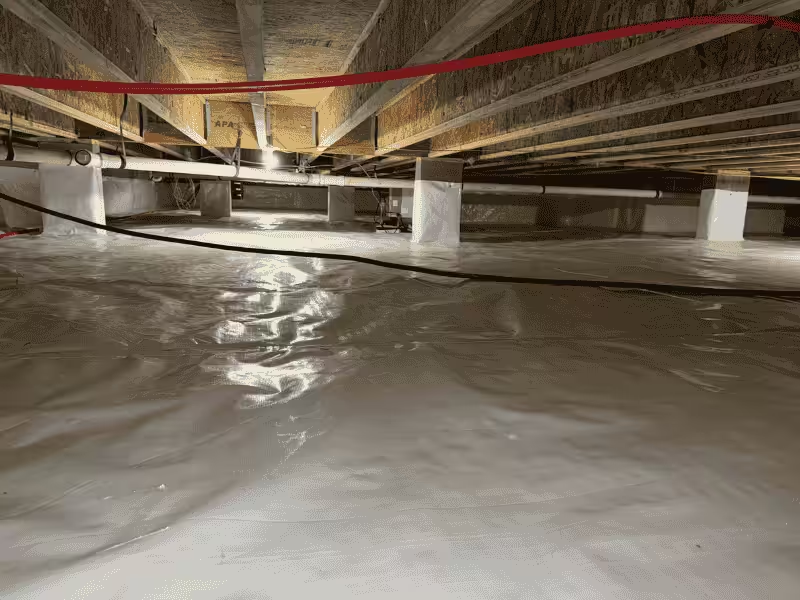
So What Is Crawlspace Encapsulation?
Crawlspace encapsulation is the process of sealing your crawlspace completely from the outside environment. A thick, heavy duty vapor barrier is installed across the floor and up the walls, all vents are sealed, and often a dehumidifier is added to control moisture levels year round.
Think of it like wrapping your crawlspace in a protective shell. Once it is encapsulated, outside air, ground moisture, and all the humidity that comes with a South Carolina summer can no longer get in and wreak havoc on your home’s structure.
This is different from simply laying a thin sheet of plastic on the ground, which a lot of older homes have. That is called a vapor barrier, and while it does offer some protection, it does not come close to a full encapsulation. A proper encapsulation is a sealed, conditioned space.
Why Charleston Homeowners Need to Pay Attention
Here is the honest truth about living in Charleston: the climate works against your home in ways that homeowners in drier parts of the country simply never deal with.
Average humidity in the Charleston area sits above 70 percent for most of the year. During summer months, it climbs even higher. That moisture has to go somewhere, and your crawlspace is an open invitation. Ground moisture evaporates upward, condenses on wood beams, and creates the exact conditions mold needs to grow.
Yahel Kama, owner of Emerald Home Solutions, has seen this play out in hundreds of Charleston area homes. “When we go under a home that has never been encapsulated, we almost always find the same things: moisture damage, signs of mold, and wood that has started to soften. Homeowners are shocked because everything looks fine from inside the house. You just cannot see what is happening underneath.”
On top of the mold and moisture concerns, an unsealed crawlspace is an open door for pests. Rats, mice, and insects love the dark, damp, undisturbed environment. Once they are in, they can cause serious damage before you ever know they are there.
What the Process Actually Looks Like
If you have never seen a crawlspace encapsulation done, here is a straightforward breakdown of what to expect.
Inspection and cleanup
Before anything goes in, the crawlspace is inspected for existing damage, standing water, mold, or pest activity. Any debris or old deteriorated materials are removed.
Moisture barrier installation
A thick liner, typically 12 to 20 mil polyethylene, is laid across the entire floor and secured up the foundation walls. Seams are taped and overlapped to eliminate any gaps. This is the core of the encapsulation.
Sealing the vents
Traditional crawlspace vents that allow outside air in are sealed off. This is a key step because bringing in humid Lowcountry air defeats the entire purpose of encapsulation.
Dehumidifier installation
In a climate like Charleston, a crawlspace grade dehumidifier is typically installed to actively pull moisture from the air inside the sealed space, keeping humidity levels in the ideal range year round.
Final inspection
Everything is checked to make sure the seal is complete and the system is working correctly.
The whole process usually takes one to two days depending on the size of your crawlspace and what condition it is in when work begins.
The Real Benefits You’ll Notice
Once your crawlspace is properly encapsulated, the difference is not subtle. Here is what homeowners in the Charleston area consistently report:
Better air quality inside the home
Since air from your crawlspace rises into your living space, cleaner air below means cleaner air above. Musty smells disappear.
Lower energy bills
A sealed crawlspace makes your HVAC system work less hard. When outside humidity is no longer flooding in from below, your system does not have to work as hard to maintain a comfortable temperature.
Protection against structural damage
Wood rot and mold can compromise the beams and joists holding your home up. Encapsulation stops that process before it starts.
A real return on investment
Erin Spencer, real estate broker in Charleston, notes that an encapsulated crawlspace is a selling point. Buyers notice it, and it removes a common inspection red flag.
Peace of mind
Knowing what is under your home is in good shape is genuinely valuable. You stop wondering.
What Does It Cost in the Charleston Area?
Crawlspace encapsulation is not a small expense, so it is worth being upfront about that. In the Charleston, SC area, most homeowners pay somewhere between $3,000 and $8,000 depending on the square footage of the crawlspace, the condition it is in, and what materials and equipment are included.
If there is existing mold or structural damage that needs to be addressed first, that will affect the total cost. A reputable company will always inspect first and give you a clear, itemized quote before any work begins.
The important thing to understand is that the cost of encapsulation almost always looks small compared to the cost of the damage a neglected crawlspace can cause over time. Replacing rotted floor joists or remediating a serious mold problem runs significantly higher than doing it right from the start.
Frequently Asked Questions
1. Does every home in Charleston need crawlspace encapsulation?
Not every home has a crawlspace. Slab foundation homes do not need it. But if your home does have a crawlspace, and you live in the Charleston area, encapsulation is strongly worth considering given the local climate.
2. How long does crawlspace encapsulation last?
A quality installation with good materials typically lasts 20 years or more. The liner itself is durable, and as long as the dehumidifier is maintained and the seal stays intact, you should not need to redo it.
3. Will encapsulation fix a mold problem I already have?
Encapsulation prevents future moisture and mold growth, but if you already have active mold, that needs to be remediated before the space is sealed. A good contractor will identify this during the inspection phase and address it as part of the project.
4. Can I encapsulate my crawlspace myself?
Technically yes, but it is not recommended. A proper encapsulation requires the right materials, the right technique for sealing seams and vents, and knowledge of what to look for in terms of existing damage. An incomplete or improperly sealed crawlspace can actually trap moisture and make things worse.
5. How do I know if my crawlspace has a problem right now?
Common signs include musty odors inside the home, floors that feel soft or bouncy, higher than normal humidity inside, increased allergy symptoms, or visible condensation or discoloration on surfaces near the floor. If you are seeing any of these, it is worth having someone take a look.
Ready to Talk About Your Crawlspace?
If you have questions about your crawlspace or want to know exactly what is going on under your home, the team at Emerald Home Solutions is happy to take a look. We serve Charleston and the surrounding Lowcountry communities, and we will give you a straight answer about what you need and what it will cost.
No pressure, no upselling. Just honest advice from people who know this market.
Contact us today to schedule your free crawlspace inspection.