
Standing Water in Crawl Space After Rain: A Charleston Homeowner’s Action Plan
What it means, what it damages, and what to actually do about it in the Lowcountry
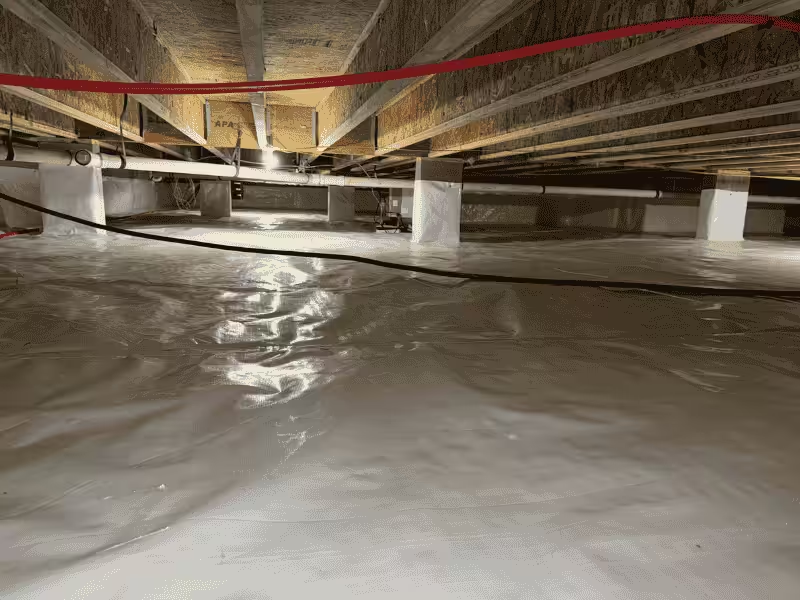
Standing water in crawl space after rain is one of the most common — and most preventable — moisture issues in Lowcountry homes. Emerald Home Solutions, Charleston, SC.
1 What Causes Standing Water in Crawl Space After Rain
Water under your home does not just appear out of nowhere. It gets there through one of a small handful of pathways, and identifying which one is responsible is the first step in solving the problem for good.
Poor Exterior Grading or Drainage
The most common cause is that the soil around your foundation slopes toward the house instead of away from it. Rain hits the ground, runs downhill toward the foundation, soaks into the soil, and works its way into the crawl space through vents, the access door, or any small gap in the foundation wall. This is true even for well-built Charleston homes — settling, landscaping changes, and decades of erosion can flatten or reverse what was once a proper slope.
Gutter and Downspout Failures
Clogged gutters and downspouts that dump water within a few feet of the foundation are responsible for a huge share of the crawl space water issues we see. A single downspout discharging a heavy storm’s worth of roof runoff right next to the house can saturate the soil enough to send water under the foundation within hours.
High Water Table
Charleston sits low. Much of the Lowcountry has a water table that rises sharply after heavy rain, particularly in neighborhoods like West Ashley, James Island, and parts of North Charleston. In those areas, no matter how good your drainage is, very wet conditions can push water up from below.
Foundation Cracks or Failed Vapor Barrier
Older foundations develop small cracks over time. A missing or torn vapor barrier on the ground inside the crawl space allows ground moisture and any seeping groundwater to enter freely. Together, these are the structural causes of moisture intrusion in many older Charleston homes.
2 Why It Happens More Often in Charleston
A few things make standing water in crawl space after rain a uniquely Charleston-area problem. The first is rainfall volume. Charleston receives more than 52 inches of rain in an average year, with summer storms often dumping multiple inches in a single afternoon. The second is the water table, which in many neighborhoods is just a few feet below the surface during normal conditions and rises sharply after heavy rain or tidal events.
The third factor is the housing stock itself. A significant portion of homes throughout the Lowcountry sit on raised crawl space foundations, many of them built decades before modern moisture control practices became standard. Original vapor barriers, where they exist at all, are often torn, displaced, or completely degraded. Foundation vents that were intended to provide ventilation in a drier climate actually allow humid coastal air directly into the space, where it condenses and adds to moisture problems even when there is no active leak.
Add in proximity to marshland, tidal flooding events, and the occasional tropical system, and you have a region where unaddressed crawl space drainage issues are essentially guaranteed to develop into water problems sooner or later.
Lowcountry Reality: Homes in low-lying areas of Mount Pleasant, Daniel Island, James Island, and parts of West Ashley regularly see crawl space water after storms even when the rest of the property looks fine. This is not a failure of the house — it is a function of where the house sits.
3 The Damage That Starts Within 48 Hours
The reason crawl space water is treated as urgent rather than something you can deal with next month is straightforward. Mold colonization begins on damp organic surfaces within 24 to 48 hours of moisture exposure. The wood framing, subfloor panels, and any paper-faced insulation in your crawl space are all organic surfaces. Once water is sitting under your house, the clock is running.
Wood Rot and Structural Damage
Floor joists, sill plates, and subfloor panels that stay damp for extended periods eventually develop wood rot. Rot is not reversible. Once a joist has lost meaningful load-bearing capacity, the only fix is replacement. In the Charleston area, floor joist repair from moisture damage commonly runs between five thousand and fifteen thousand dollars depending on scope.
Mold Affecting Indoor Air Quality
Even if mold stays confined to the crawl space, it does not stay isolated from your living space. The stack effect pulls air from your crawl space up into the home through gaps, plumbing penetrations, and HVAC returns. Mold spores in crawl space air end up in the air your family breathes.
Pest Attraction
Standing water draws insects, rodents, and other pests that would otherwise have no reason to be there. Termites, in particular, thrive in damp wood — and a wet crawl space is essentially an invitation.
| Time After Water Intrusion | What Develops | What It Costs to Fix Later |
|---|---|---|
| 0–24 hours | Saturated insulation, wet wood surfaces | Drying, sanitizing — minimal cost |
| 24–48 hours | Initial mold colonization begins | $500–$2,000 mold treatment |
| 1–2 weeks | Visible mold spread, musty odors emerge | $2,000–$6,000 remediation |
| 1–3 months | Wood softening, insulation failure | $3,000–$8,000 with material replacement |
| 6+ months | Structural damage to floor joists | $5,000–$15,000+ joist repair |
4 What to Do Within the First 24 Hours
If you have just discovered standing water in crawl space after rain, the actions you take in the first day matter more than anything else. Here is the order to do them.
- Document the water with photos and video. Get clear images of the water level, the access door, the foundation walls, and any visible damage. Time-stamped documentation is invaluable for insurance and for tracking whether the issue recurs.
- Identify the source if possible. Walk the exterior of the home looking for clogged gutters, downspouts discharging too close to the foundation, low spots in the landscaping, or visible cracks in the foundation. Note what you find.
- Do not enter the crawl space yourself. Standing water in an enclosed crawl space carries real safety risks — electrical hazards from low outlets or wiring, possible sewage contamination, and air quality issues. This is a job for someone with the right equipment.
- Call a qualified professional. The water needs to be extracted as quickly as possible, ideally within 24 hours. Most contractors who handle crawl space moisture issues in the Charleston area can respond within a day for active water situations.
- Reduce indoor humidity meanwhile. Run your HVAC system on its normal cooling cycle and add a portable dehumidifier in any room above the affected crawl space area. This slows the rate at which moisture from below can affect floor surfaces and indoor air.
5 One-Time Event vs. Recurring Problem
Not every instance of water under the house signals the same severity of problem. Distinguishing a one-time event from a chronic pattern matters because the solution is different in each case.
Signs It Was Likely a One-Time Event
An unusually heavy storm or hurricane that overwhelmed otherwise functional drainage. A single broken downspout that has since been repaired. A nearby construction or excavation event that temporarily disrupted ground conditions. In these cases, drying out the crawl space, treating any affected materials, and addressing the specific cause often resolves the issue.
Signs It Is a Chronic Pattern
Water appearing after multiple separate rain events, especially less severe ones. Visible high-water marks on foundation walls or piers indicating past water levels. A persistently wet or muddy crawl space floor even between rainfalls. An existing musty odor in the home that was present before the current event. In these cases, surface fixes are not enough — the home needs a comprehensive moisture management solution.
The honest answer most homeowners need to hear is that if water is appearing under the house more than once, the conditions producing it are almost certainly still in place. They will keep producing it until they are addressed at the system level.
6 How Encapsulation Actually Solves This
For homes where crawl space water is a recurring issue, a proper encapsulation is the only solution that addresses the underlying conditions rather than the symptoms. Encapsulation is not the same as a vapor barrier. It is a complete system designed to keep moisture out and manage what little gets in.
What an Encapsulation Includes
A reinforced thick-mil liner that covers the ground and runs up the foundation walls, completely sealing the space from soil moisture. Sealed foundation vents that prevent humid outside air from entering. A sealed access door. Active dehumidification sized for the crawl space volume. And in homes with water intrusion history, a perimeter drainage system and sump pump that captures any water that does make its way in and removes it before it can sit.
Why It Works for Charleston Homes Specifically
The Lowcountry’s combination of humidity, rainfall, and high water table means that even a perfectly graded exterior is not enough to keep crawl spaces dry on its own. Encapsulation works because it accepts that some moisture will always try to get in and creates a system that handles it before it can do damage. After encapsulation, even a major storm event that would previously have caused flooding under the house becomes a manageable situation rather than a structural emergency.
You can read more about the full process and what is included on our crawlspace encapsulation in Charleston service page.
7 When to Call a Professional Immediately
Some crawl space situations warrant a same-day call rather than a wait-and-see approach. If any of the following are true, do not delay scheduling service.
- Visible standing water more than an inch deep anywhere in the crawl space
- A musty odor that has emerged or worsened in your home since the recent rain event
- Recurring water after multiple rain events, not just an unusual storm
- Soft spots in your floor, sticking doors, or floors that feel cool or damp
- Allergy or respiratory symptoms in family members that started or worsened recently
- You have never had your crawl space professionally inspected and are seeing water for the first time
- The home recently came through a hurricane, tropical storm, or significant flooding event
An honest inspection should give you photos or video of what is actually happening under your home, an explanation of the source, and a clear set of options for solving it. It should not include high-pressure sales for a service you are not sure you need.
Crawl Space Services Across the Lowcountry
Emerald Home Solutions provides crawlspace encapsulation in Charleston and emergency moisture response throughout the surrounding Lowcountry communities:
Frequently Asked Questions — Crawl Space Water After Rain
Common questions from Charleston-area homeowners about crawl space moisture, drainage, and encapsulation.
No. Mold colonization on damp wood and insulation begins within 24 to 48 hours, according to EPA guidance. Waiting even a week turns a containable drying-and-treatment job into a remediation job that costs significantly more and takes longer to resolve. The right window for action is the first 24 hours after you discover the water.
Removing the standing water is step one, but it does not solve the underlying problem. If you do not identify and address why the water got in — bad grading, gutter issues, a foundation crack, a damaged vapor barrier, or the local water table — you will be doing it again after the next significant rain. Extraction without diagnosis is treating the symptom.
In the Charleston area, costs vary widely based on what is causing the water and how much damage already exists. Simple drainage corrections — extending downspouts, regrading soil, repairing a vapor barrier — might run a few hundred to a few thousand dollars. Full crawl space encapsulation with a perimeter drainage system and sump pump typically falls between $5,000 and $12,000 for an average home. Compared to the $5,000 to $15,000+ that floor joist repair costs once damage develops, the math usually favors fixing it before damage compounds.
It depends on the source. Sudden, accidental water intrusion from a specific covered event (like a burst pipe) is often covered. Gradual seepage, groundwater intrusion, and damage from poor drainage are generally not covered under standard policies. Flood insurance, which is separate, can cover certain rainwater or storm-related events. Document everything carefully and consult your insurer before assuming coverage.
No. A vapor barrier is designed to slow ground moisture from evaporating up into the crawl space. It is not designed to stop liquid water from coming in through vents, the access door, or foundation gaps. If your crawl space has standing water after rain, a vapor barrier alone — even a fresh one — will not solve the problem. You need either improved exterior drainage, a perimeter interior drain system, or full encapsulation depending on the severity.
Yes — though the urgency is different. A small puddle that appears after rain still indicates that water is finding a path inside. The path will not get smaller on its own; it tends to expand as soil shifts and materials degrade. A small puddle today is often a larger pool a year from now. It is also exactly the kind of conditions that produce slow, hidden mold growth over months while the homeowner has no idea anything serious is developing.
In the Charleston area, most reputable crawl space contractors can be on site within 24 to 48 hours for an active water situation, and many offer same-day service when conditions allow. After a major storm event affecting many homes at once, response times stretch, which is one more reason to schedule promptly rather than waiting to see if the issue resolves itself.
Water Under Your House? Don’t Wait for the Next Storm.
If you have just discovered standing water in your crawl space — or have been seeing it after every heavy rain — the first 24 hours matter most. Emerald Home Solutions provides honest crawl space inspections and full encapsulation services across Charleston and the Lowcountry with same-week scheduling.
📞 Call 843-350-5035 Request a Free Inspection