
Why One Room in Your Charleston Home Is Always Hotter Than the Others
What’s actually broken in the airflow — and how to fix it for good
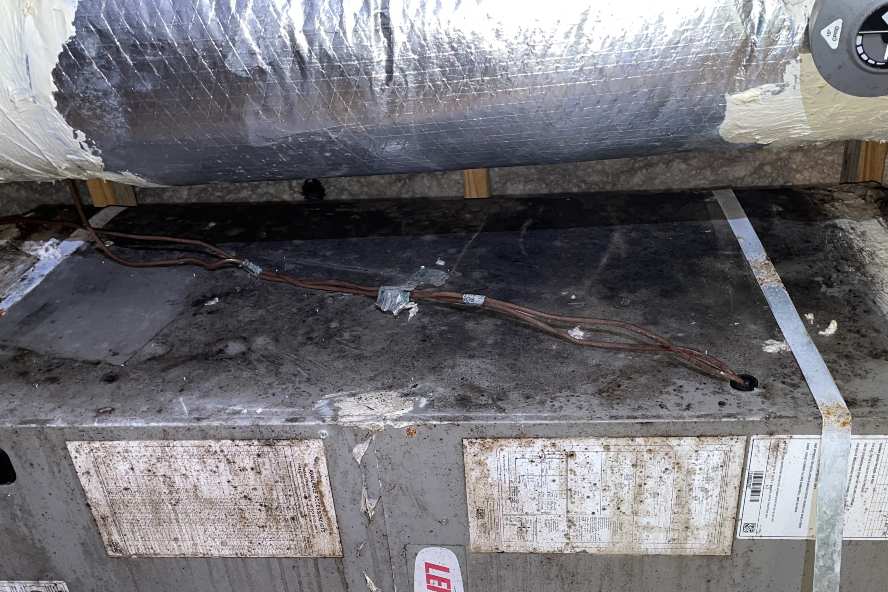
When one room is hotter than the others, the cause is almost always inside the ductwork. Emerald Home Solutions, Charleston, SC.
1 What’s Actually Happening When One Room Is Hotter Than the Others
Air conditioning systems are created and installed with the intention that each room within the house maintains the same temperature. These systems calculate how hot each room can potentially become and how much air is required to provide enough cooling power to each area to maintain that temperature. However, there are numerous reasons the system fails to maintain these balances over time.
Duct systems are designed to balance each area of the home to maintain the same indoor temperatures within each of the house’s rooms. The balance of each room’s temperature within the home is calculated at the time of the house’s construction or HVAC system installation. Each of the rooms is assessed for size, heat gain from sunlight exposure, and other factors that contribute to the heating of each particular area of the home. Based on these calculations, the duct system is created and installed in a way that ensures that the size of each area’s duct is sized appropriately to provide enough conditioned air to each area of the home.
However, over time, there are numerous reasons that the system fails to continue to maintain that balance. For example, if the ducting for a specific portion of the home becomes blocked by debris or insulation, that area will begin to reach higher temperatures than the others in the house. The same can happen if a section of the duct becomes disconnected or crushed over time due to attic remodeling, HVAC system changes, or even the efforts of a homeowner.
Additionally, there may be leaks at the joints of the ducting system over time due to the expansion and contraction of the metal over time. These leaks allow conditioned air to escape the home without contributing to heating any portions of the home. Finally, it is also possible that the portion of the home that becomes overheated is because of an insulation problem in that specific area. For example, if the bedroom in question was constructed within the attic with no insulation between the bedroom and the attic, the bedroom will become overheated due to the heat that radiates into the bedroom from the attic.
Heads up: Many people attempt to fix the problem of certain rooms experiencing cooler temperatures by closing the vents located in the cool rooms. This actually results in a higher imbalance in airflow; the HVAC system begins to experience higher pressures on its components, forcing air to exit through leaks in the return ducts. Additionally, the blower motor within the HVAC system wears down much faster if this trick is used. We go over this trick in detail in section 6 of this article.
2 The Most Common Reasons One Room Is Hotter Than the Others
There are several reasons for the HVAC system within your Charleston home to distribute the cooling air unevenly throughout the home. According to numerous HVAC companies that offer services to the Lowcountry area, the majority of causes of overheating in one area of the home relative to the others can be attributed to the four most common reasons.
Blocked or Heavily Restricted Ductwork
Perhaps the most common reason for uneven airflow within the home. Over the years, several types of debris may have entered the ducting system. For instance, drywall debris may have dropped into the ducting during a remodeling job in the home. Insulation may have fallen into the ducting system during installation of that insulation. Additionally, various objects (toys, pencils, dryer sheets) may have entered the ducting system by an unaware homeowner.
All of these types of obstructions can significantly reduce the amount of airflow that travels through the ducting system to the area that it supplies with conditioned air. A single restriction in the duct system can limit the amount of air that travels to one area by 30 to 60%. Such a percentage almost always leads to one specific area within the home becoming hotter than the others.
Disconnected or Crushed Duct Runs
These types of problems are underappreciated by many homeowners. The flexible ducting that is installed within most homes can become disconnected or crushed during various home renovations, HVAC system installations, or even by a homeowner. For example, various HVAC technicians, electricians, and pest control crews may have had to access the flexible ducting system during their work in the home. Additionally, the ducting may have been crushed during the placement of a box within the area that it used to supply air to.
This type of problem can significantly impact the evenness of the airflow throughout the home. If the ducting is crushed or disconnected, the air conditioning system may not be able to efficiently distribute air to every portion of the home. This could result in the area that does not receive sufficient airflow to become too hot for comfort.
Leaks at Joints and Connections
Over time, there may be leaks in the ducting system at the joints of the system. These types of leaks may form due to the expansion and contraction of the metal of the ducting system with the changes in outside temperatures over time. Additionally, some ducting systems are connected to the rest of the HVAC system at points referred to as boots. These connections may also experience leaks over time.
According to ENERGY STAR, an organization that works to improve the energy efficiency of residential and commercial HVAC products, the average home loses 20 to 30% of its conditioned air to leaks in its ducting system. The most common instances of leaks occur at the attic and crawl space ducting system runs. Additionally, these leaks mean that the room that is supplied with the air that exits at the end of the longest leaky duct run becomes hotter than the others in the home.
Insulation Problems Specific to That Room
It is possible that the ducting system is functioning normally, but the area that becomes too hot within the home loses too much conditioned air to the remainder of the home due to insufficient insulation. For instance, if the room becomes too hot because it is located beneath an uninsulated portion of the attic, the HVAC system may be able to supply the air that is needed to each portion of the home, but the lack of insulation allows the air to heat within the room.
3 Why Charleston Homes See This Problem More Than Most
The issue of uneven airflow within homes has several factors that relate to the area. Charleston is a city whose climate is often hot in the summer and mild in the winter months. In particular, the attics of homes in the area can reach temperatures of 150°F or more during the summer months. Not only do the ducting systems that pass through these attics lose some of their effectiveness due to the degradation of the insulation jacketing around the ducting system in these climates, but the ducting system also becomes a target for debris to enter the system due to the heated air movement within the ducting system.
Additionally, the ducting system within several Charleston homes is especially long due to the age of the structures. The longer the ducting system is, the more conditioned air that it loses as it is transported to different parts of the home. Finally, a number of homes in Charleston have HVAC systems that were retrofitted into the structures when they were originally built. These HVAC systems were not designed to provide air conditioning to the structures that were retrofitted with them. As a result, the ducting system installed into these structures was never sized according to the layout of the homes. Such inconsistencies in HVAC system installation also contribute to airflow issues in the city.
| Charleston Factor | What It Does to Comfort | Where It Shows Up |
|---|---|---|
| 150°F+ summer attics | Degrades duct insulation; cooks the air inside runs | Top-floor rooms fed by attic ducts |
| Long duct runs in older homes | Last room on the run gets weakest airflow | Farthest bedroom from the air handler |
| Retrofitted HVAC in historic homes | Duct sizing was never balanced to the layout | Additions, converted attic rooms |
| Storm damage from hurricanes | Loose connections, displaced flex runs | Any room with attic-fed ductwork |
| South or west-facing sun exposure | One room takes more heat load than the others | Rooms with afternoon sun on multiple walls |
4 How to Figure Out Which Cause You Have
There are several tests you can perform within your home to determine the cause of the issue. Although not perfect, these tests can help determine whether the issue relates to the ducting system, insulation, or some other factor altogether.
The vent test. With the air conditioning system in your home running in a hot cycle, place your hand a few inches from each of the supply vents in your home. The temperature of the air that exits each vent should be roughly the same. However, if the air coming from the supply vent for the hot room is notably cooler or weaker than the others, you likely have a problem in your ducting system feeding that room with conditioned air.
The seasonal test. Pay attention to the temperature of the room that is hotter than the others during the winter months. If it is colder in that portion of the home in the winter months than the other portions of the home, the airflow to the area is limited in both hot and cold seasons. That is a sign of a ducting system problem. If the problem is limited to the summer months, however, then another evaluation of the home’s insulation will help to determine the cause of your HVAC system’s problem.
The pattern test. Consider whether the room that becomes hotter than the others in your home is an issue that has been present since you moved into the home, or whether it began to develop over time. If the problem began to develop over time, the likely causes may be related to the buildup of debris in the ducting system, leaks in the ducting system due to the degradation of the insulation of the ducting system, or the degradation of the insulation of the portion of the home that overheats. If the problem began suddenly after some work in the attic, or after storms rolled through the area, the problem may be related to storm damage to the ducting system.
5 What Actually Fixes the Problem
There are a few different fixes that can occur to help balance the temperatures throughout your home. Each of these fixes will be explained below.
Professional Duct Cleaning
A company that is certified by the National Air Duct Sweeping Association (NADCA) will use both negative-pressure equipment and scope cameras to assess your ducting system for debris, insulation, and other blockages along its path. This procedure will also diagnose and correct the issues with your ducting system. This is the first step that most HVAC companies take when dealing with uneven airflow in a home.
Sealing the Ducting System
The ducting system’s various joints will be sealed with mastic sealant to prevent air from leaving the home through those joints. ENERGY STAR estimates that sealing the ducting system will save the average home several hundred dollars per year on HVAC utility bills.
Replacing Damaged Duct Sections
The sections of the ducting system that are found to be damaged due to crushing or disconnecting will need to be replaced with new sections of either flexible or rigid sheet metal ducting.
Insulating the Problem Area
In some cases, the ducting system is working properly, but the overheated portion of the home is losing conditioned air due to poor insulation between that portion and the heated attic areas above it. Insulating the ducting system in that portion of the home can resolve the problem.
Balancing the System’s Dampers
If your HVAC system’s dampers are manual (they are in most homes) and can be accessed by a technician, those dampers can be adjusted to ensure that air is distributed more evenly to each portion of the home.
Adding Booster Fans to the System
This last resort fix is used to allow more conditioned air to reach those portions of the home that are fed through very long duct runs. Since the air conditioning system may actually blow more air through the return ducts than through the supply ducts, the addition of an inline booster fan is an attempt to even out the airflow from the air conditioner.
Adding Insulation to the Attic
Finally, in cases where the overheated portion of the home is located beneath the attic and there is no insulation between the bedroom and the attic, the simplest fix may be to add insulation to the attic above the overheated bedroom.
For more information about the ducting system cleaning process, equipment, and credentials, visit our air duct cleaning in Charleston service page.
6 Common Mistakes That Make It Worse
A handful of well-intentioned homeowner moves end up making the problem of uneven cooling in the home even harder to solve. These are the mistakes that we see time and time again when we show up at a home after the homeowner has already attempted to fix it themselves.
Closing the Vents in the Cooler Rooms
Homeowners often believe that if they close the vent in the cooler portion of the home, that the HVAC system will naturally move the conditioned air to the hotter portion of the home. This is not the case. Closing vents in your home creates static pressure in the HVAC system. This static pressure forces the HVAC system to lose conditioned air through the most common leaks in the duct system (which are in the attic) and puts additional strain on the blower motor. Many HVAC systems fail years early due to this one simple mistake. The hot room will not become cooler by performing this task.
Dropping the Thermostat
Another common solution to the problem of one room being hotter than others in the home is dropping the thermostat setting to cool the hot portion of the home. This will make the remainder of the home feel colder than desired and will drastically increase the homeowner’s energy bill due to the constant run of the air conditioning system. The thermostat is not the problem.
Buying a Portable Air Conditioner for the Hot Room
While a portable air conditioner may help with the hot room in the short term, it does not address the root of the problem. The homeowner will have introduced yet another cost into the HVAC system and made the existing problem invisible. In many cases, there will be not only a hot room with the portable air conditioner but also a broken HVAC system that has been going unnoticed for years.
Assuming It Is an HVAC System Problem
One of the first thoughts that most homeowners have when confronted with one room that is hotter than others in the home is that the air conditioning system is undersized for the home. In many cases, this is not the issue. If the rest of the home is comfortable, then the HVAC system is the proper size for the home. Instead, there is simply a problem with the distribution of air from the system to that specific room.
7 When to Call a Professional
There are some situations in which calling a professional to inspect your HVAC system and ductwork is a wise choice. If any of the situations described below apply to your home, it is time to call in the professionals.
- There is a temperature difference between the hot room and the rest of the house that is 5°F or more.
- The supply vent in the hot room is providing less airflow than supply vents in the remainder of the house.
- The hot room is also significantly colder than the other rooms in the house during the winter months.
- The temperature differences between your home’s rooms started a few years ago and have become progressively worse over time.
- There have been any recent work done in the attic related to the roof or insulation of your home.
- Your energy bills have started to climb without explanation.
- Your HVAC system is running longer cycles to heat or cool your home.
- More than one room in your home is hotter than the others.
Professional assessments of your HVAC system and ductwork will involve a camera inspection of the duct runs to determine where the issue is. Professionals will also measure the airflow that comes out of each supply vent. A proper inspection will tell you about the problem and what they see as the best solution — not one to replace your HVAC system.
Air Duct Cleaning Across the Lowcountry
Emerald Home Solutions provides professional air duct cleaning in Charleston and HVAC airflow services throughout the surrounding Lowcountry communities:
Frequently Asked Questions — Uneven Cooling in Charleston Homes
As with most services we provide, there are some questions that are asked of us time and time again from the homeowners of Charleston. Here are some of the most common.
In homes throughout Charleston, the #1 cause of one portion of the home reaching higher temperatures than others is related to the ductwork system. Whether it is due to buildup in the ducts, a disconnected duct run in the attic, or leaks in the system, those are the most common issues related to hot rooms. The next most common issue is inadequate insulation above the hot portion of the room. HVAC system failures are rare.
While it is possible, the thermostat is usually not the problem. If the temperature in the hot room is 5°F or more above that of another portion of your home, that means the thermostat is not the problem — it means that the HVAC system is not distributing the air to that portion of the room. Thermostats are more of a problem in homes where each of the rooms is even slightly cooler than others but with a mild climate. A dramatically hotter room compared to others is a duct problem.
No. Many homeowners attempt to do this, but it makes the problem worse. By closing the vents, the HVAC system loses conditioned air through its leaks (again, in the attic), placing additional strain on the system’s blower motor. Additionally, no matter how many vents you may close, the hot room will not become cooler. This also shortens the life of your HVAC system.
A simple test to determine this is to test the issue during the winter months. If the hot room is also significantly colder than the rest of the home in the winter, the issue is related to the ductwork. If only the hot room is hotter in the summer and cooler in the winter, the insulation above the room is the problem. If both seasons are significantly uneven and your crawl space is unencapsulated, then all three issues may impact your home. A professional inspection can quickly determine the cause.
In most cases, yes. Whether it is due to buildup or a blocked duct run in your HVAC system, we will clear that out. Additionally, any issues with the duct system that may have been caused by a disconnected run, leaks, or insulation issues will be identified during the duct inspection with a camera scope. Duct cleaning will diagnose and treat the most common causes of a hot room in a home.
Professional air duct cleaning costs between $300 and $700 for most homes in the Charleston area. Should repairs to the duct system be required in addition to duct cleaning, those costs will range between $200 and $1,500. For severe issues related to the duct system, costs will be higher — but those situations are rare. The cost of fixing the duct system is likely to save your home money on energy costs over time.
In rare instances, the ductwork system is actually in good condition. In those instances, it is likely that the hot room of your home is experiencing issues with insulation or windows; or, that a mini-split or ductless HVAC system may be required. These solutions can be discussed with a professional who inspects the HVAC system and ductwork.
Stop Avoiding That One Room.
An inspection of the duct system will most likely find and fix the problem in your home for less than you would expect. Call the professionals at Emerald Home Solutions for an inspection of your HVAC system and air ducts throughout Charleston and the Lowcountry.
📞 Call 843-350-5035 Request a Free Estimate