
When to Replace Ductwork Instead of Cleaning It: A Charleston Homeowner’s Guide
The honest answer about when cleaning is enough — and when it isn’t
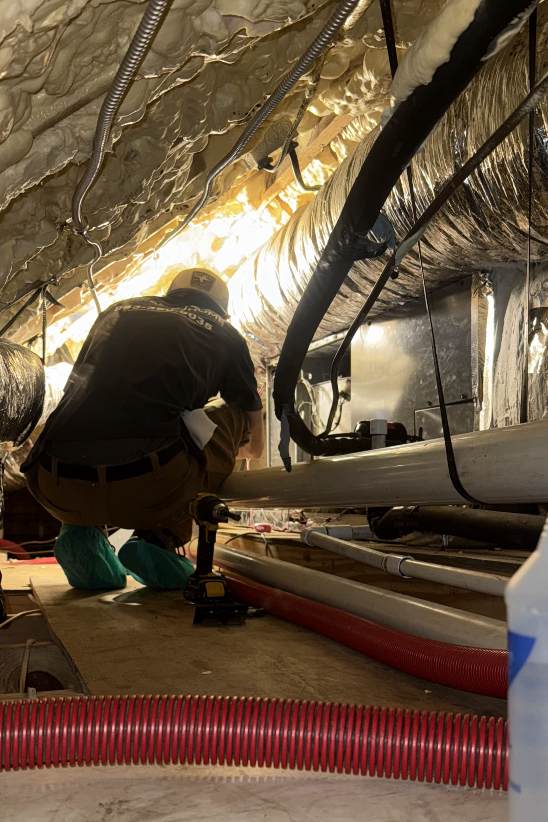
Knowing when to replace ductwork versus when duct cleaning is enough can save Charleston homeowners thousands of dollars. Emerald Home Solutions, Charleston, SC.
1 When Cleaning Is the Right Answer
Dust, Pollen, and Allergens
One of the most common reasons Charleston homeowners call about their ductwork is related to the amount of dust, pollen, and other allergens in the home. Whether you notice visible dust around your vents or suffer from allergy symptoms when the air conditioner turns on, these issues can be resolved through professional duct cleaning.
Airflow Issues in One Room
If your HVAC system heats only one room in the house, it’s likely that one of the ducts leading to that area is partially blocked. Although this might sound like a significant problem with your heating system, it can be fixed through professional duct cleaning.
Mold on the Inside of Ductwork
If the ductwork in your home has mold on the inside of its rigid metal sheet sections, this can be treated with an antimicrobial duct cleaning solution. Mold cannot live within metal sheets — only on their surfaces — so any removed mold can be an indication of a simple duct system cleaning.
Aging of Ducts
If your duct system is between 15 and 20 years old but otherwise intact, it likely does not need to be replaced. Many homes in the Lowcountry have experienced the same issue of using an older system and ducting layout for several decades. We’ve performed duct system and cleaning in homes on the Charleston peninsula that are over 40 years old and still running appropriately after a professional duct cleaning.
2 When to Replace Ductwork
Visible Damage to Ductwork
If your ducting system features flexible ducting that has developed kinks, crushed sections, or otherwise torn open sections, it can no longer be effectively cleaned. These damaged sections will need to be replaced in most cases.
Rodent Damage Inside Ducting
If there are established rodent nests within your ducting system, the insulation has been waterlogged with urine, and the ducting has been chewed through in multiple places, it can no longer be adequately cleaned. The CDC recommends the removal and replacement of these sections of ducting.
Asbestos-Containing Ductwork
Many of Charleston’s homes were built before 1980 with insulation and flexible ducting that contained asbestos. Once the ducting in your home contains asbestos, it can never be effectively cleaned. The only way to deal with this is to replace the ducting in your home, a task that must be performed with licensed asbestos contractors.
Severely Mold-Damaged Ducting
If the mold within your duct system has absorbed into porous ducting materials, such as fiberboard ducting, internal duct liners, or insulation that is bonded to the inside of the duct system, it can no longer be effectively cleaned. These components will need to be removed from the system.
Leakages in the Ducting System
Small leakages in any of the connections of a duct system can be sealed during duct cleaning. However, in cases of widespread connections between ducting sections or sections of the ducting system that have rusted through over time, the cost of repairing it becomes more valuable than purchasing new ducting.
3 Why the Question of Duct System Replacement Comes Up More Often in Charleston Homes
There are a few specific reasons related to the region that the United States Department of Energy (DOE) has determined that duct replacement is a more common issue in Charleston than it is in the rest of the nation.
High Humidity
Charleston’s climate features high humidity levels for much of the year. Over several decades, this has led to degradation of the insulation that lines some of the ducting systems in Charleston homes, rusting of the sheet metal connections in those systems, and mold growth on any porous ducting materials inside the homes.
Hurricane Damage
Hurricanes are common along the Lowcountry coast and have strong potential to damage any of the homes that they pass over. A storm that lifts the shingles off a home can also disconnect the ducting that runs from the home’s attic to its HVAC system.
Age of the Homes in Charleston
Many of the homes in Charleston were built several decades ago. Many others still have their original ducting systems installed in place — some of which may be at the end of their natural lifespan.
| What You’re Seeing | When Cleaning Is the Right Answer (Most of the Time) | When Duct System Replacement Is Needed |
|---|---|---|
| Dust, mold on metal ducting | Professional duct cleaning is enough | No visible damage to ducting system |
| Airflow issues in specific room | Duct cleaning with repair to problematic room’s duct | Partial blockages in duct system |
| Crushed or disconnected ducting | Ducting sections can be replaced | Visible damage to ducting systems |
| Rodent infestations inside ducting | Duct system can be treated for rodents | Infestations with established nests |
| Asbestos-containing wrap on ducting | Ducting can be replaced with asbestos abatement | Asbestos-containing wraps or insulation (especially in homes built prior to 1980) |
| Mold-damaged internal ducting | Replacement of affected internal duct system components | Any mold damage that has absorbed into any porous ducting materials (fibers, linings) |
4 How to Properly Decide When to Replace Ductwork
A proper inspection by a qualified professional to determine whether duct system replacement is needed in your Charleston, Mount Pleasant, Summerville, or Lowcountry home will involve performing a few specific steps.
- Inspection with camera scope into the ductwork itself.
- Inspection of each of the connections in the HVAC system.
- Assessment of whether the ducting system contains asbestos-containing insulation — especially in homes built before 1980.
- Presentation of cost options for duct cleaning versus system replacement.
According to the United States Department of Energy, properly sealed and insulated ducts can improve the heating and cooling efficiency of a home by as much as 20%. For most homes, sealing and cleaning existing ducting provides the same comfort level as replacement of that ducting system — but at a fraction of the cost required to perform the replacement.
5 What a Proper Contractor Will Tell You
- Photos and videos of the inside of your ducting systems. If they do not show you the inside of your ducting system before providing you with an estimate for duct system replacement, ask why.
- A specific and identifiable problem. If they cannot identify a specific problem in your ducting that needs to be addressed, ask them to explain why they believe you need a duct system replacement.
- An itemized cost quote. If they will not provide you with an itemized cost quote for the work that will need to be performed for duct system replacement, ask for the list of costs.
- A discussion of duct cleaning as an alternative solution. If they will not mention the possibility of duct cleaning as an alternative to duct system replacement, ask them why.
- A willingness to provide a written diagnosis of your ducting system. If they will not write up the diagnosis of your system that was performed by the contractor, ask them why.
- Local references and licensing. If they will not provide you with local references or will not state that they are licensed contractors in South Carolina, ask them why.
For more information about our process and pricing, visit our air duct cleaning in Charleston service page.
6 Red Flags That Suggest an Oversell
A few common sales tactics will give you pause when a contractor approaches you with recommendations for HVAC duct replacement that don’t appear to be necessary. None of these are subtle signals — yet many people miss them when they’re concerned about the quality of the air in their homes.
“Limited Time” Pricing on Replacement
Offering “limited time” or “today only” pricing on HVAC duct replacement is a standard sales tactic. Ductwork does not go on sale, and contractors will quote the price of HVAC duct replacement that will be valid for at least a few days.
Recommending Replacement Without a Camera Inspection
Recommending HVAC duct replacement without first conducting a camera inspection of the ductwork is another red flag. Contractors will spend approximately 15 minutes performing a camera inspection of the HVAC ductwork for any blockages, mold, or damage. The cost to the HVAC contractor is almost nothing, and this inspection adds little to the total cost of HVAC duct replacement.
Vague Diagnoses Like “The Whole System Is Bad”
A diagnosis of “the whole system is bad” is a vague description of a problem. A more accurate description would be something like “The internal fiberglass liner in your supply trunk has absorbed moisture and shows visible mold colonization.” If a contractor can’t offer a diagnosis that specifically identifies your problems, ask for clarification.
Bundling Replacement With Unrelated Work
Bundling HVAC duct replacement with unrelated home improvements, such as HVAC system replacement and installation of a whole-home air purifier, is a sales tactic that makes it sound like you’re getting a discount. In reality, each of these items would be priced individually at $10,000 or more, and the discount appears when bundled is not reflective of the true value of the services.
7 When to Get a Second Opinion
There are a few scenarios in which you may want to get a second opinion from another licensed HVAC contractor.
- The HVAC duct replacement quote is $3,000 or more, and you are new to the HVAC industry.
- The first contractor to approach you to discuss HVAC duct replacement refused or skipped inspecting your ductwork with a camera.
- The diagnosis of the HVAC duct problem was vague and you were not provided with an explanation for why duct cleaning would not fix the issue.
- Your duct replacement was bundled with unrelated services like installation of a new HVAC system or whole-home air purifier.
- You were pressured into signing the HVAC contractor’s contract on the same day they approached you or they promised you a discount if you accepted on the same day.
- The contractor refuses to put their findings or the scope of the work they will perform in writing.
- Something about the conversation with the HVAC contractor made you feel like they were dishonest with you.
A reputable HVAC contractor will not be offended that you are seeking a second opinion. In most cases, they will encourage you to get a second opinion to prove that their recommendation and quote are the best available for your HVAC system. If they are defensive about you getting a second opinion, there is likely a reason for that.
Air Duct Cleaning Across the Lowcountry
Emerald Home Solutions provides honest air duct cleaning in Charleston and straight-talk ductwork assessments throughout the surrounding Lowcountry communities:
Frequently Asked Questions — When to Replace Ductwork vs. Clean
Commonly asked questions from homeowners in the Charleston area who are trying to determine whether their HVAC ductwork needs to be replaced or simply cleaned.
Cleaning your ductwork is the most common solution for HVAC problems. Replacement is only needed in cases of damage, asbestos in the ductwork, mold within the ductwork that has been absorbed into the duct components, and contamination within the duct system. A camera inspection of the ductwork is the only way to diagnose these problems.
An honest contractor will not recommend duct replacement if they do not find any of the reasons to require replacement. However, there are financial incentives for contractors to recommend duct replacement instead of duct cleaning. Duct replacement costs between $3,000 and $10,000 or more, while duct cleaning is only $200 to $700. If a contractor is recommending replacement of HVAC ductwork without solid reasons, get a second opinion. A reputable contractor will not be offended.
Typical duct systems made of sheet metal will last between 20 and 30 years, though there are some homes that have had sheet metal ducts for more than 40 years. Duct systems that are made of flexible metal will last between 15 and 20 years. The humidity levels in Charleston place some strain on the duct systems, but the main reason for replacement is the age of the duct system.
If your home was constructed before 1980, there is a chance that your duct system contains asbestos. Asbestos will be in the ductwrap that was placed around the sheet metal during construction. It will appear as a layer of white or gray wrap around the sheet metal. Attempting to identify the material yourself is not recommended — disturbing the wrap will release fibers into the air that are potentially hazardous to your health. A licensed asbestos inspector can test for the presence of asbestos. Should the test reveal the presence of asbestos, only a licensed asbestos abatement contractor can perform the work.
Yes. In many cases, it is best to replace only the portion of the duct system that needs to be replaced. For example, if only one section of a duct system made of flexible metal was crushed, only that section would need to be replaced. Similarly, if only one portion of a duct system has mold within it, only that portion of the duct system would need to be replaced.
Air duct cleaning ranges between $300 and $700. The cost of partial repair and replacement of duct systems is between $500 and $2,500. Full replacement costs between $3,000 and $10,000 or more depending on the size of the home, the materials used, and whether there is asbestos in the duct system that must be abated. Knowing when to replace your duct system instead of simply having it cleaned is the difference of several thousand dollars in your home’s HVAC system costs.
Get an inspection from a professional HVAC contractor. A professional will use a camera to inspect your duct system and provide an explanation of what they find. Then, get a second opinion from another HVAC contractor before spending anything over a few thousand dollars. The two contractors’ estimates should agree on the need for the same type of service. If they do not, that tells you something about the work that they will have to perform on your ductwork. Most homeowners in Charleston need only duct cleaning. Those who require HVAC duct replacement deserve to know from an honest contractor with a proven track record.
Get an Honest Assessment Before You Spend Thousands of Dollars.
If you have been told that your duct system needs to be replaced, but you are not ready to commit to a contractor or a price, getting an honest second opinion can save you thousands of dollars. Emerald Home Solutions provides duct and HVAC system inspections and air duct cleaning throughout Charleston and the Lowcountry with same week scheduling available.
📞 Call 843-350-5035 Request a Free Estimate