Crawl Space Encapsulation: Mold Prevention, Energy Efficiency & Air Quality Benefits
Why mold prevention through crawl space encapsulation is one of the smartest investments a Lowcountry homeowner can make
Emerald Home Solutions — Crawl Space Encapsulation & Mold Prevention Services, Charleston, SC
1 What Is Crawl Space Encapsulation and Why Does It Matter for Mold Prevention?
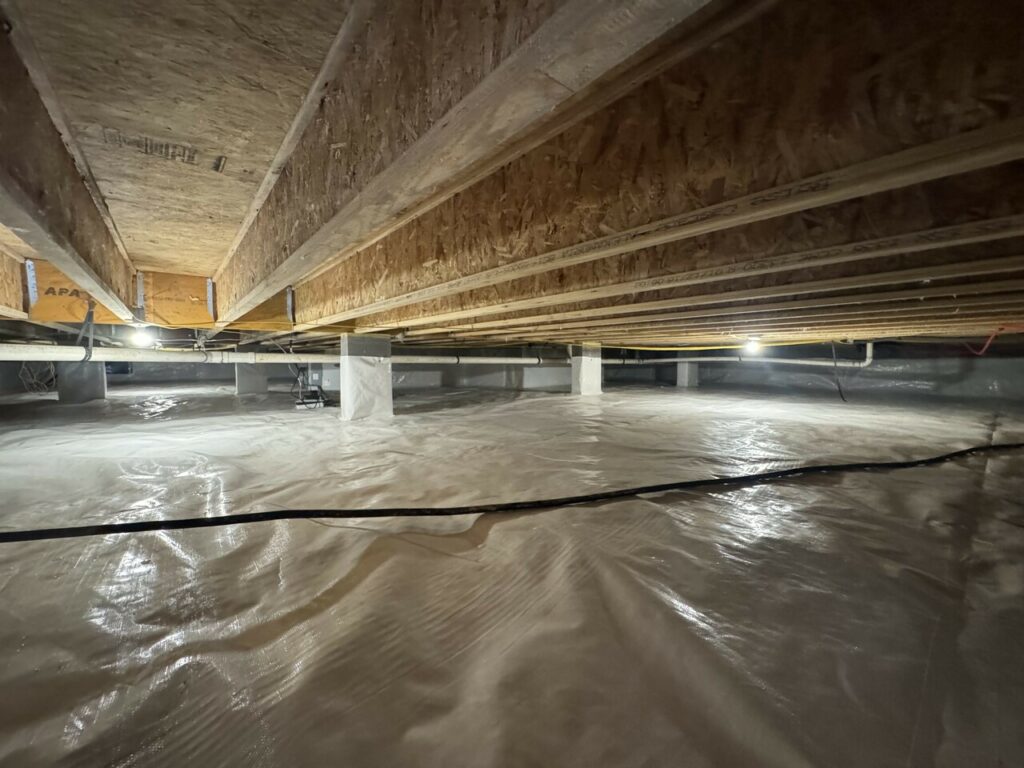
Crawl space encapsulation is the process of completely sealing your home’s crawl space from the external environment using a heavy-duty vapor barrier, sealed vents, and — in most Lowcountry applications — a dehumidifier system. The goal is to eliminate the moisture conditions that make mold growth possible. Think of it as wrapping your home’s foundation in a protective shell: a barrier that keeps ground moisture, humid outdoor air, pests, and organic debris permanently outside where they belong.
In Charleston, SC and the surrounding Lowcountry, mold prevention isn’t a seasonal concern — it’s a year-round necessity. The EPA confirms that approximately 50% of the air circulating through a home’s living spaces originates from the crawl space. Without encapsulation and active mold prevention measures in that space, whatever grows there — mold spores, allergens, musty odors — eventually rises into the rooms where your family lives and breathes.
Why Mold Prevention Starts Below Your Floors: Unencapsulated crawl spaces in the Lowcountry routinely maintain humidity levels of 70–90% during summer months — well above the 50% threshold at which mold begins to colonize. Effective mold prevention requires bringing that humidity down permanently, and encapsulation is the only solution that achieves this at the source.
| Mold Prevention Strategy | Effectiveness | Long-Term Solution? |
|---|---|---|
| Crawl space encapsulation with vapor barrier | Excellent — eliminates moisture at source | Yes — 20+ year lifespan |
| Dehumidifier only (no encapsulation) | Moderate — manages symptoms, not cause | Partial — ongoing maintenance required |
| Vented crawl space (traditional) | Poor in humid climates — introduces moisture | No — worsens mold conditions in SC |
| Surface mold cleaning only | Minimal — treats visible mold, not source | No — mold returns without moisture control |
| Basic plastic sheeting (DIY) | Limited — tears easily, gaps allow moisture | No — insufficient for Lowcountry conditions |
2 Mold Prevention: The Primary Benefit of Crawl Space Encapsulation
Mold prevention is the central reason most Charleston-area homeowners invest in crawl space encapsulation — and the results speak for themselves. Research cited by the EPA shows that encapsulated homes have 60% fewer airborne mold spores than unencapsulated homes. That’s not a marginal improvement — it’s a transformative one for families dealing with allergies, asthma, or persistent respiratory issues of unknown cause.
Mold prevention through encapsulation works because it eliminates all three conditions mold requires to grow: moisture, organic material to feed on, and darkness. By sealing the crawl space with a heavy-duty vapor barrier and maintaining controlled humidity through a dehumidifier, encapsulation removes the moisture component permanently. Without moisture, mold cannot survive — making encapsulation the most reliable and lasting mold prevention strategy available for Lowcountry homes.
The Vapor Barrier: Foundation of Mold Prevention
The vapor barrier is the cornerstone of mold prevention in any encapsulation system. A professional-grade barrier — typically 20-mil polyethylene for South Carolina’s demanding conditions — creates an impermeable seal across the crawl space floor and up the foundation walls, preventing ground moisture from evaporating upward into the space. For effective mold prevention in the Lowcountry, the barrier must be properly overlapped, sealed at seams, and secured at all penetrations (pipes, support columns, vents) — gaps of even a few inches undermine the entire mold prevention system.
Maintaining Humidity Below the Mold Prevention Threshold
Effective mold prevention requires maintaining indoor relative humidity below 50% — ideally between 30% and 50%. In the Lowcountry’s climate, achieving this without active systems is impossible. A properly sized dehumidifier integrated into the encapsulation system monitors and maintains humidity automatically, ensuring continuous mold prevention regardless of outdoor conditions. Modern smart dehumidifiers adjust their output based on real-time humidity readings, providing efficient mold prevention without unnecessary energy use.
- Vapor barrier (20-mil minimum) — eliminates ground moisture evaporation, the primary mold prevention mechanism
- Sealed foundation vents — prevents warm, humid outdoor air from entering and condensing on cooler surfaces
- Integrated dehumidifier — maintains humidity below 50% for continuous mold prevention year-round
- Sealed penetrations and seams — ensures no gaps in the mold prevention barrier at pipes, columns, or overlaps
- Interior drainage system — manages any water that enters, preventing pooling that would undermine mold prevention efforts
3 How Encapsulation Improves Indoor Air Quality for Your Family
Mold prevention and indoor air quality are inseparable — you cannot achieve one without the other in a crawl space home. Because of the “stack effect,” air naturally flows upward through a home. Whatever exists in an unencapsulated crawl space — mold spores, dust, allergens, radon gas, pest debris — continuously rises into the rooms where your family spends most of their time.
The American Lung Association links high indoor allergen levels directly to respiratory illness and worsening asthma. For Lowcountry families — where outdoor pollen is already abundant and HVAC systems run year-round — effective mold prevention through encapsulation provides measurable relief. Homeowners consistently report fewer allergy symptoms, reduced reliance on allergy medications, and noticeably cleaner, fresher air throughout the home following encapsulation.
If you suspect mold has already spread from your crawl space into your home’s living areas or ductwork, a professional mold inspection should accompany or precede your encapsulation project. Encapsulation is the definitive mold prevention measure — but if mold colonies are already established in the crawl space or above it, mold remediation must address existing growth before the prevention system is installed.
Charleston-Specific Concern: Homes throughout the Lowcountry with crawl spaces and forced-air HVAC systems face a compounded air quality risk — HVAC ductwork that runs through an unencapsulated crawl space continuously draws in mold spores and distributes them to every room. Mold prevention through encapsulation protects not just the crawl space but the entire air distribution system in your home. Consider pairing encapsulation with air duct cleaning for maximum indoor air quality improvement.
4 Energy Efficiency: The Financial Case for Encapsulation
Beyond mold prevention, crawl space encapsulation delivers significant and measurable energy savings. An unencapsulated crawl space acts as a continuous leak in your home’s thermal envelope — conditioned air escapes through the floor, while unconditioned outdoor air infiltrates from below. In Charleston’s climate, where air conditioning runs for eight or more months of the year, this translates directly into hundreds of dollars in unnecessary energy costs annually.
According to the U.S. Department of Energy, homes with properly encapsulated crawl spaces typically see energy bill reductions of 15% to 20%. For the average Charleston-area household, that can represent $300 to $500 in annual savings — a return that, when combined with avoided repair costs from moisture damage and the long-term mold prevention value, makes encapsulation one of the highest-return home improvement investments available.
Real Lowcountry Savings: “Since encapsulating our crawl space, our monthly energy bill has dropped significantly,” reports a homeowner in Summerville, SC. Energy savings from encapsulation compound over time — the long-term financial benefit of mold prevention, avoided structural repairs, and lower utility costs can reach $5,000 to $10,000 over a decade.
How Encapsulation Improves Energy Efficiency
- Seals air infiltration pathways between the crawl space and living areas, reducing HVAC load
- Protects floor insulation from moisture damage — wet insulation loses up to 40% of its R-value, worsening energy efficiency
- Reduces the humidity load on your HVAC system, allowing it to cool and dehumidify more efficiently
- Stabilizes indoor temperatures, reducing the frequency and duration of HVAC cycles
- Enables the HVAC system to last longer by reducing the strain caused by conditioning a leaky thermal envelope
5 Structural Protection: Defending Your Home From the Ground Up
Mold prevention through encapsulation also protects the physical structure of your home — specifically the floor joists, support beams, subfloor sheathing, and foundation elements that moisture and pests attack most aggressively in the Lowcountry’s climate. Wood rot from persistent moisture exposure is the single most common form of structural deterioration in South Carolina crawl space homes, and its progression is directly linked to the absence of effective mold prevention measures in the crawl space.
The connection between mold prevention and pest control is equally significant. Termites and wood-boring insects are overwhelmingly attracted to damp wood — the same conditions that support mold growth. The National Pest Management Association reports that homes with encapsulated crawl spaces experience 80% fewer termite infestations. In coastal South Carolina, where termite pressure is among the highest in the country, this structural protection benefit alone justifies the mold prevention investment for many homeowners.
“Before encapsulating our crawl space, we faced a termite problem every summer,” shares a homeowner from Isle of Palms. “Since the encapsulation and mold prevention system was installed, the termites are gone, and our floors are in far better condition.” This kind of combined mold prevention and pest deterrence is unique to encapsulation — no other single home improvement delivers both simultaneously.
Signs of Moisture Damage That Require Immediate Attention: Sagging or spongy floors, doors and windows that stick or won’t close properly, visible rust on metal fasteners in the crawl space, and soft or discolored wood on floor joists all indicate that moisture has already caused structural damage. If you’re seeing these signs, contact Emerald Home Solutions immediately — a mold prevention and encapsulation assessment should be combined with a structural evaluation.
6 Mold Prevention Is Especially Critical in These Lowcountry Situations
While every crawl space home in Charleston benefits from encapsulation and mold prevention, certain situations make the investment urgent rather than simply advisable:
- After any flooding or storm water intrusion — tidal flooding affects low-lying neighborhoods across the Lowcountry; mold prevention must begin within 24–48 hours of water exposure to prevent colonization. See our water damage restoration service for immediate post-flood response.
- Historic homes on the Charleston peninsula — older construction, original vapor barriers (if any), and aging plumbing create compounded mold prevention challenges in South of Broad, Harleston Village, and similar neighborhoods
- New construction in Cane Bay, Nexton, or Carnes Crossroads — wood framing exposed to summer rain during construction can harbor mold before drywall is even installed; mold prevention encapsulation should be one of the first post-construction priorities
- Homes where family members have respiratory conditions — asthma, COPD, and mold allergies are all significantly worsened by inadequate mold prevention in the home’s foundation
- Homes with pets — pet dander combined with mold spores from an unencapsulated crawl space creates a compounded indoor allergen load that mold prevention encapsulation directly reduces
- Investment or rental properties — mold prevention protects property value and reduces liability exposure from tenant health complaints related to indoor air quality
7 Professional Encapsulation vs. DIY: Why Mold Prevention Requires Expert Installation
The appeal of a DIY crawl space encapsulation project is understandable — materials are available at hardware stores, and the concept seems straightforward. However, for effective mold prevention in the Lowcountry’s demanding climate, professional installation is not a luxury — it’s a requirement for the system to actually work.
Mold prevention encapsulation failures almost always stem from improper installation: inadequate barrier thickness, unsealed seams, gaps around penetrations, improperly sized dehumidifiers, or missed moisture sources. Any one of these failures renders the entire mold prevention system ineffective. Emerald Home Solutions uses commercial-grade materials — 20-mil reinforced polyethylene vapor barriers, professional-grade sealants, and properly sized dehumidification systems — that far exceed what is available to the average homeowner at retail.
“I considered doing it myself, but the professionals at Emerald Home Solutions gave me peace of mind knowing the mold prevention system was done right,” shares a homeowner from North Charleston. That peace of mind is grounded in reality — a properly installed encapsulation system provides mold prevention and moisture control for 20 or more years with basic annual maintenance.
What Emerald Home Solutions’ Mold Prevention Encapsulation Includes
- Pre-installation crawl space assessment to identify existing moisture sources and any mold requiring remediation before encapsulation
- 20-mil commercial-grade vapor barrier installation across floor and up foundation walls
- Sealing of all foundation vents, penetrations, and seams for complete mold prevention coverage
- Interior drainage channel installation where groundwater intrusion is present
- Properly sized dehumidifier with humidity monitoring for continuous mold prevention
- Post-installation humidity verification to confirm mold prevention threshold is achieved
8 Long-Term Maintenance for Ongoing Mold Prevention
Crawl space encapsulation is a long-term mold prevention investment — not a one-time fix that requires no further attention. Like any home system, the encapsulation requires periodic maintenance to ensure its mold prevention effectiveness is maintained year after year, particularly in the Lowcountry’s demanding climate.
| Maintenance Task | Frequency | Mold Prevention Purpose |
|---|---|---|
| Crawl space visual inspection | Monthly | Catch new moisture intrusion or barrier damage early |
| Dehumidifier filter cleaning | Quarterly | Maintains effective humidity control for mold prevention |
| Vapor barrier inspection for tears or gaps | Every 6 months | Any gap compromises the entire mold prevention system |
| Post-storm inspection | After major weather events | Storms can introduce new moisture threatening mold prevention |
| Professional encapsulation inspection | Annually | Identifies issues invisible to homeowners; confirms mold prevention is functioning |
The SC DHEC recommends maintaining indoor relative humidity below 50% as a fundamental mold prevention measure — your encapsulation system’s dehumidifier should be verified at least quarterly to confirm it is achieving this standard year-round.
Crawl Space Encapsulation & Mold Prevention Across the Lowcountry
Emerald Home Solutions provides professional crawl space encapsulation and mold prevention services throughout the greater Charleston region, including:
Frequently Asked Questions — Crawl Space Encapsulation & Mold Prevention in Charleston, SC
Common questions from Lowcountry homeowners about mold prevention, encapsulation, and protecting their homes.
Professional crawl space encapsulation for mold prevention in the Charleston area typically ranges from $3,000 to $8,000 depending on the size of the crawl space, the severity of any existing moisture or mold issues, and whether an interior drainage system or dehumidifier is included. While this may seem like a significant upfront cost, the combined value of long-term mold prevention, energy savings, avoided structural repairs, and improved air quality typically delivers $5,000 to $10,000 in total benefit over a decade. Contact Emerald Home Solutions at 843-350-5035 for a free mold prevention assessment and encapsulation estimate.
When professionally installed and properly maintained, crawl space encapsulation is the most effective mold prevention measure available for Lowcountry homes — reducing airborne mold spore counts by up to 60% compared to unencapsulated crawl spaces. Mold prevention is not absolute — no system can guarantee zero mold indefinitely — but encapsulation eliminates the persistent moisture conditions that make mold growth inevitable in South Carolina’s climate. The key to lasting mold prevention is pairing the encapsulation with an active dehumidification system and annual professional inspections.
Yes — always. Encapsulation is a mold prevention system, not a mold remediation system. If active mold colonies are present in your crawl space at the time of encapsulation, sealing them inside the barrier traps the existing mold and may allow it to continue growing on organic materials already within the space. A professional mold inspection followed by mold remediation of any confirmed growth should always precede the installation of a mold prevention encapsulation system. Emerald Home Solutions can coordinate both services.
A professionally installed mold prevention encapsulation system using commercial-grade 20-mil polyethylene vapor barriers typically lasts 20 years or more with proper maintenance. The dehumidifier component requires quarterly filter cleaning and annual servicing to maintain optimal mold prevention performance. The barrier itself should be inspected every six months for tears, displacements, or gaps — particularly after storm events or flooding, which are common throughout the Lowcountry.
Yes — and this is one of the most consistently reported benefits by Lowcountry homeowners following encapsulation. The mold prevention benefits of encapsulation directly reduce the airborne mold spore load inside the home. Combined with reduced dust mite habitat (which thrives in humid conditions), fewer allergens entering through the HVAC system from the crawl space, and cleaner air overall, mold prevention encapsulation frequently produces noticeable improvement in allergy and asthma symptoms. The American Lung Association recognizes moisture control and mold prevention as essential components of healthy indoor air quality.
Standard South Carolina homeowner’s insurance policies typically do not cover proactive mold prevention encapsulation. However, if moisture damage or mold growth in the crawl space resulted directly from a covered event — such as a burst pipe or storm-related flooding — insurance may cover remediation costs and potentially some encapsulation components. Mold prevention encapsulation is generally classified as an elective home improvement rather than a covered repair. We recommend reviewing your policy and consulting your insurer before assuming coverage. Emerald Home Solutions can provide detailed documentation to support any applicable insurance claims.
Absolutely. Mold prevention is not exclusively an older-home concern. Newly framed Lowcountry homes are among the most vulnerable to early mold growth — wood framing exposed to summer rain during construction can harbor mold colonies before the drywall is even installed. Many homeowners in newer Summerville, Cane Bay, and Carnes Crossroads developments have discovered mold in crawl spaces within the first year or two of occupancy. Proactive mold prevention through encapsulation — ideally within the first two years and before the builder’s warranty expires — is one of the wisest investments a new construction homeowner in the Lowcountry can make.
Don’t wait. Call Emerald Home Solutions at 843-350-5035 or request a free assessment online. Our team will conduct a thorough crawl space inspection, identify any active mold growth requiring remediation, assess your home’s specific mold prevention needs, and provide a detailed encapsulation plan and estimate. Mold grows quickly in the Lowcountry — delaying mold prevention action by even a few weeks during summer months can mean the difference between a straightforward encapsulation project and a major remediation. See the EPA’s mold guidance for additional information on health risks and the importance of prompt mold prevention action.
Ready to Protect Your Home With Professional Mold Prevention?
Don’t wait for visible mold, sagging floors, or rising energy bills to take action. Emerald Home Solutions provides professional crawl space encapsulation and mold prevention services throughout Charleston and the Lowcountry — with same-week scheduling available.
📞 Call 843-350-5035 Request a Free Estimate